
Tiny Fonts Copy and Paste is an easy way to transform ordinary text into stylish miniature letters for social media profiles, usernames, captions, and creative messages. With a tiny text generator, you can create attractive small text without installing fonts or using complicated editing software.
Tiny Fonts Copy and Paste tools offer different styles, including superscript letters, small caps, miniature alphabets, and decorative Unicode characters. You can convert your text online, copy the result, and paste it wherever the platform supports those characters.
Tiny Fonts, Small Text, and Font Generator Keywords
Tiny Fonts Copy and Paste tools help users make ordinary writing look smaller and more decorative. A tiny text generator converts standard letters into available Unicode characters that resemble miniature text. These tools are useful for creating stylish bios, nicknames, captions, and personalized messages.
A small text generator, tiny font generator, mini text generator, and miniature text generator generally offer similar features. Users can type a word or sentence, explore tiny text styles, and select a result they like. A free tiny font generator is especially convenient because it works directly in a browser without requiring font downloads.
Unicode Tiny Text, Superscript, and Subscript
Unicode tiny letters are special characters that can appear smaller than ordinary text. Tiny Fonts Copy and Paste generators use available Unicode characters to create miniature writing that can be copied into supported applications. These characters are different from normal font formatting because the text itself contains special symbols.
Superscript letters appear slightly above the regular text line, while subscript letters appear below it. A superscript text generator or subscript text generator can help create mathematical expressions, decorative labels, and short notes. However, Unicode does not provide a complete small version of every letter and number, so some conversions may look different from the original text.
Small Caps, Mini Letters, and Stylish Text Variations
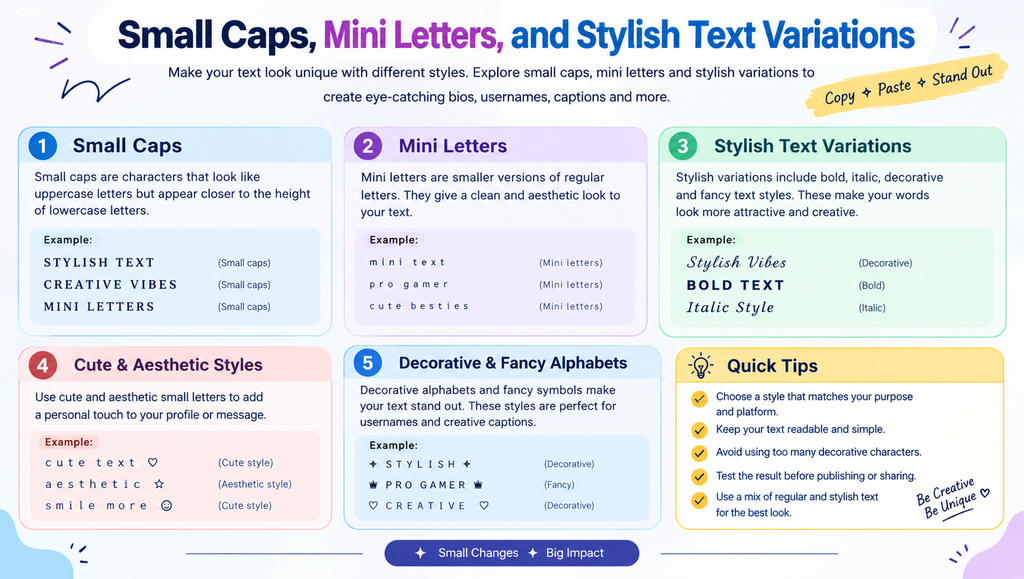
Small caps are characters that resemble uppercase letters but appear closer to the height of lowercase letters. A small caps generator can create stylish text for profile descriptions, headings, and usernames. Tiny Fonts Copy and Paste styles may also include tiny bold text, miniature capital letters, compact alphabets, and decorative small letters.
Different styles suit different purposes. Cute tiny letters can give a playful appearance, while aesthetic tiny fonts may work well for minimalist profiles and short quotes. Before choosing a style, check that the letters remain recognizable. Combining too many decorative characters can make your text difficult to read.
Copy and Paste Tiny Fonts for Social Media
Social media users often look for Tiny Fonts Copy and Paste options to personalize their Instagram bios, TikTok profiles, Facebook posts, WhatsApp messages, and X profiles. Small text can make a short phrase stand out among regular writing. It can also add a subtle decorative touch to captions and status updates.
To use these styles, enter your text into an online tiny text converter and choose a suitable result. Copy the converted text and paste it into the profile or message field. Remember that every platform has its own character restrictions and display behavior, so test the result before saving your bio or publishing a post.
Tiny Fonts for Gaming Names and Usernames
Tiny fonts can give gaming names and online usernames a distinctive appearance. Players may use miniature letters for Discord profiles, Roblox display names, PUBG names, Free Fire nicknames, and Minecraft-related profiles. A tiny username generator makes it easier to explore different combinations without manually searching for individual Unicode symbols.
When creating a gaming name, choose a style that other players can recognize easily. Tiny Fonts Copy and Paste characters may not be accepted in every game, and some platforms restrict special symbols in usernames. Check the game’s naming rules before using decorative letters, and avoid characters that make your username confusing or difficult to search.
Tiny Text Generator Features and How to Use It
A useful tiny text generator offers a simple input box, instant conversion, a text preview, and a convenient copy option. Some tools provide multiple outputs, including superscript text, small caps, miniature letters, and other Unicode-based styles. These features make text customization faster for people who want a quick result.
Using Tiny Fonts Copy and Paste is straightforward. First, type or paste your original text into the generator. Next, review the available styles and choose the version that suits your needs. Copy the converted output and paste it into your chosen application. Finally, check the appearance on your device before sharing or publishing it.
Tiny Fonts for Bios, Captions, and Creative Writing
Tiny text can be used to personalize short bios, captions, quotes, messages, and digital signatures. For example, a miniature phrase can complement an aesthetic Instagram bio, while decorative text can add variety to a short status update. Tiny Fonts Copy and Paste also provides a quick way to experiment with different writing styles without redesigning an entire profile.
These styles are best used selectively. A short decorative heading or nickname can look attractive, but converting a complete paragraph into tiny characters may reduce readability. You can keep important information in standard text and use miniature letters for a few selected words. This approach creates visual variety without making your content unnecessarily difficult to read.
Tiny Font Compatibility, Unicode Limitations, and Readability
Tiny text is based on Unicode characters, which means its appearance depends on the characters supported by a device, application, or font. Some letters may display correctly on Android, iPhone, Windows, and macOS, while other symbols may appear differently or as empty boxes. Tiny Fonts Copy and Paste cannot guarantee identical results across every platform.
Readability is another important consideration. Very small-looking characters may be difficult for people with visual impairments to read, and some screen readers may pronounce unusual Unicode symbols unpredictably. Decorative text may also be harder to search, copy, or process than ordinary writing. For accessibility, keep essential information, names, links, and instructions in standard text whenever possible.
Tiny Text Generator Benefits and Best Practices
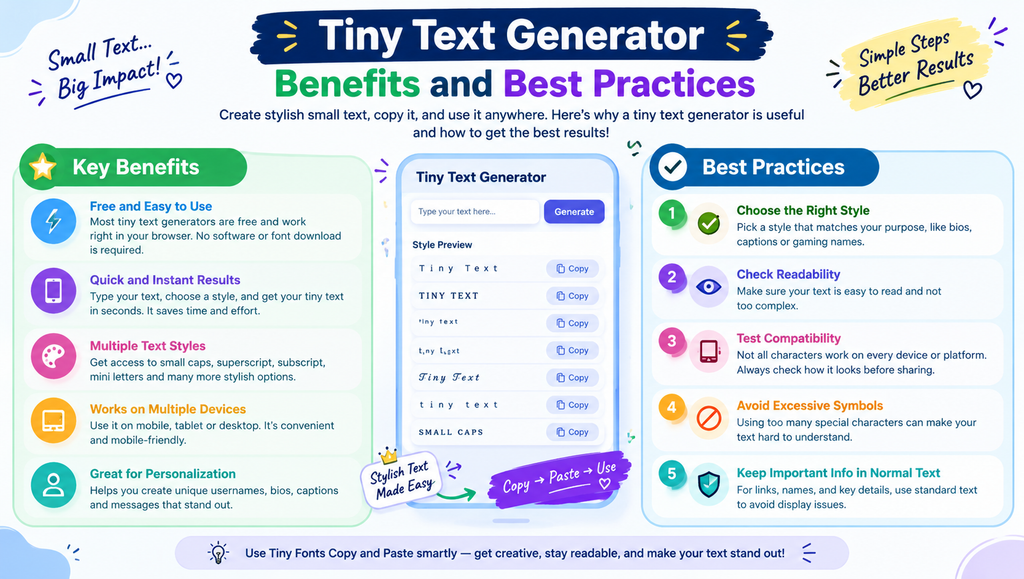
An online tiny text tool offers a quick way to customize writing without installing additional software. Many generators are free to use and work on mobile devices and desktop computers. Tiny Fonts Copy and Paste can help users experiment with profile designs, create personalized nicknames, and produce decorative text for everyday digital communication.
For the best results, select a style that matches your purpose, check the converted output, and test it on the platform where you intend to use it. Avoid excessive Unicode symbols, especially in important messages. If a character does not display correctly, try another style or return to ordinary text. These simple steps help you balance creativity, compatibility, and readability.
Tiny Fonts Copy and Paste: 100+ Stylish Examples
Tiny Fonts Copy and Paste gives you plenty of options for creating miniature text for social media, gaming profiles, and personal messages. You can experiment with superscript letters, small caps, tiny symbols, and decorative text styles to find an appearance that matches your personality. These styles are especially useful when you want to make a short phrase or username look different from ordinary text.
Here are some examples you can copy and use:
- Tiny text: ᴛɪɴʏ ᴛᴇxᴛ
- Small caps: ꜱᴛʏʟɪꜱʜ ᴛᴇxᴛ
- Superscript: ᵗⁱⁿʸ ᶠᵒⁿᵗˢ
- Decorative text: ˢᵗʸˡⁱˢʰ ᵛⁱᵇᵉˢ
- Mini username: ᴄᴜᴛᴇ ɢɪʀʟ
- Aesthetic text: ᵃᵉˢᵗʰᵉᵗⁱᶜ
- Tiny name: ᵃˡⁱ
- Gaming style: ᴘʀᴏ ɢᴀᴍᴇʀ
Choose a style that fits your intended use and test it before publishing. Not every character is supported on every platform, so some examples may appear differently depending on your device.
See more:Tiny Fonts Copy and Paste
How to Choose the Best Tiny Font Style for Your Needs
Choosing the right Tiny Fonts Copy and Paste style depends on where you plan to use it. For Instagram bios and short captions, small caps or superscript text can create a neat decorative effect. For gaming usernames, select distinctive but readable characters that comply with the game’s username rules.
For professional profiles, announcements, and important messages, ordinary text is usually easier to read. You can combine regular writing with a few tiny letters to create a balanced appearance. Always check compatibility, avoid excessive symbols, and make sure your message remains understandable after you copy and paste it.
1. What are Tiny Fonts Copy and Paste?
Tiny Fonts Copy and Paste refers to miniature-looking text styles made with Unicode characters. You can generate the text online, copy the result, and paste it into supported social media profiles, messages, captions, and usernames.
2. How can I create tiny text online?
Open an online tiny text generator, type your words into the input box, and choose from the available styles. Copy your preferred result and paste it into your chosen application. No separate font installation is usually required.
3. Can I use tiny fonts on Instagram and WhatsApp?
Yes, many Unicode-based tiny text styles work in Instagram bios, captions, comments, and WhatsApp messages. However, support can vary by feature, device, and application version. Always check the final appearance before publishing.
4. Are tiny text generators free to use?
Many tiny text generators are free and work directly in a web browser. Some provide several styles and a copy button without requiring an account. Available features depend on the particular website.
5. Why does my tiny text appear differently on some devices?
Tiny text may look different because devices and applications use different fonts and Unicode rendering systems. Some characters may be unsupported, and certain platforms restrict special symbols. Choosing commonly supported characters and testing the result can help prevent display problems.